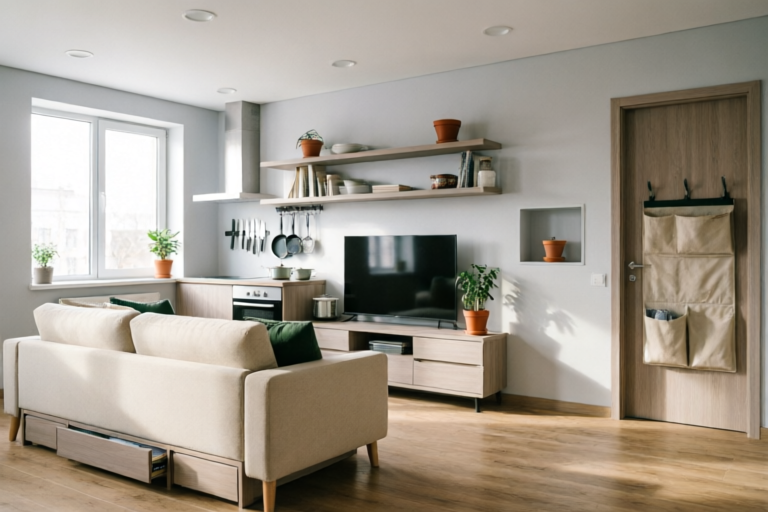
Small Space Living
Maximize Storage In Small Apartments With Simple Hacks
Live Big, Store Smart
# Maximize Storage In Small Apartments With Simple Hacks
Living in a small apartment is a unique challenge that many modern city dwellers face. As urbanization continues to grow and housing costs rise, the demand for compact living spaces has skyrocketed. While there are undeniable perks to smaller living environments, such as lower rent and reduced utility bills, the lack of square footage can lead to significant frustration. Nothing feels more claustrophobic than walking into a room that seems perpetually cluttered, making even simple daily tasks feel like navigating a maze. However, the solution to limited square footage does not always involve expensive renovations, tearing down walls, or moving to a larger property. Instead, effective organization and strategic design choices can transform a cramped area into a spacious, functional, and stylish home. This comprehensive guide explores simple yet powerful hacks to maximize your storage potential, ensuring you enjoy the freedom of movement and peace of mind that comes with a well-organized living space.
## Conquering the Limited Square Footage Dilemma
### Understanding the Modern Apartment Struggle
Before diving into solutions, it is crucial to understand why small apartments feel so constrained. In a large house, storage issues are often solved by dedicating rooms to specific functions—walk-in closets for clothes, pantry rooms for food, garages for seasonal gear. In an apartment, these luxuries are non-existent. Every item you own must have a designated place that fits within the existing footprint. When storage runs out, belongings inevitably spill onto surfaces, creating visual noise and reducing usable floor space. This phenomenon creates a cycle where clutter makes the room feel smaller, which makes organizing harder.
The common pain points include insufficient closet space, lack of counter space in kitchens, difficulty finding places for bulky winter clothing, and zero room for hobbies or work equipment. Many renters feel stuck because they believe the only option is to install built-in cabinetry, which landlords typically prohibit due to damage concerns or lease restrictions. Others assume they must throw everything away to fit, which feels wasteful and stressful. The reality is that spatial efficiency is about geometry and behavior, not just physical volume. By rethinking how you utilize the three-dimensional space around you, rather than just the two-dimensional floor plan, you can significantly increase capacity without altering the structure.
### The Cost-Benefit Analysis of Organization
One of the biggest misconceptions about fixing a small apartment is that it requires a significant financial investment. Homeowners might think about hiring designers or contractors to install custom shelving or mezzanine floors. While these are valid options for property owners, they are often overkill and sometimes illegal for tenants. The beauty of storage optimization lies in its accessibility and affordability. You do not need a construction crew to hang a shelf or buy a new piece of furniture. Most "hacks" rely on repurposing everyday items, utilizing modular hardware, or making deliberate purchasing decisions.
Effective organization does not require major renovations or high costs. A simple set of tension rods, some adhesive hooks, and a few baskets can solve problems that would otherwise cost thousands to build into the wall. Furthermore, investing time in organization yields immediate returns. A clean environment reduces cognitive load, lowers stress levels, and improves productivity. This psychological benefit is just as valuable as the physical space gained. Therefore, when planning your storage overhaul, consider the return on investment not just in dollars, but in daily quality of life. By adopting a mindset of intentional placement, every inch of your apartment becomes more valuable.
## Harnessing Vertical Space Above Your Head
When floor space is premium currency, the air above you represents untapped gold. Most people instinctively look at what is on the ground or immediately in front of them when thinking about storage. However, walls extend upward, offering hundreds of cubic feet of potential storage that often go completely unused. The goal is to clear the floor to maintain an open feeling while shifting weight and bulk higher up. Here is how to strategically harness this overlooked resource.
### Installing High Shelves and Floating Systems
Floating shelves are among the most popular vertical storage solutions for good reason. They do not require legs or bases, maximizing the visual openness of the room while providing sturdy surfaces for books, decor, or essential supplies. For those who are renting, it is vital to select products that can be mounted securely without damaging drywall beyond repair. Look for heavy-duty mounting kits designed specifically for rental properties that remove easily upon move-out. Position these shelves at eye level or slightly above, as items placed too low become obstacles, while those too high may become unreachable dust traps.
To make the most of wall space, consider installing corner shelving units. Corners are often dead zones where traditional square furniture fails to fit. A triangular or arc-shaped shelving unit can fill this void perfectly. Additionally, tiered shelving ladders offer both stability and style. These lean against the wall and hold multiple tiers of bins or boxes, allowing you to store light items on top and heavier items on the bottom. This gradient approach enhances safety while utilizing height efficiently. Whether you are storing books, plants, or kitchenware, moving items vertically frees up crucial table and countertop real estate.
### Utilizing Tension Rods and Wall-Mounted Racks
Tension rods are a versatile, non-permanent magic tool for small spaces. They can be used inside cupboards to hang pots and pans via clips, separating shirts within a closet to save drawer depth, or even hanging plants near windows without drilling holes. Because they operate on friction, they can be moved frequently as your needs change. For example, use a rod across a doorway to hang coats or towels, instantly turning a blind corner into a wardrobe.
Wall-mounted racks take this a step further by removing the need for cabinets entirely. Pegboards are excellent for garages or kitchens, allowing you to customize hooks and shelves to fit your specific tools or utensils. Magnetic strips for knives or metal scissors free up drawer space and keep items sanitary. For the bathroom, suction-cup organizers can hold toiletries near the shower head, freeing up vanity space. The key principle here is clearance: keep the floor clear by keeping walls active. This not only hides clutter but also directs traffic through the room smoothly. When you utilize air space for bulky items like luggage, holiday decorations, or sports equipment, you preserve the central area for living and socializing. Remember, the highest points of your room are perfect for items you rarely access, keeping daily essentials within easy reach below.
## Selecting Furniture with Built-in Storage Potential
Furniture in a small apartment must work overtime. In a larger home, you might have a coffee table solely for display and aesthetics. In a compact apartment, every purchase must justify itself by serving at least two functions: acting as a core furnishing element and hiding away the mess. The trend toward "multifunctional furniture" is not just a design fad; it is a necessity for survival in micro-living. Choosing the right pieces can drastically alter how much stuff you feel comfortable owning.
### Lift-Top Tables and Hidden Compartments
Lift-top coffee tables are prime examples of smart engineering. At first glance, they look like normal wooden boxes holding magazines and remotes. However, with a gentle push, the top lifts up and tilts back, revealing a deep storage cavity underneath. This compartment is ideal for storing blankets, board games, media devices, or snacks that you want to keep accessible but out of sight. Unlike ottomans where you have to kneel and lift a heavy lid, lift-tops offer ergonomic ease of access. Similarly, dining tables with drop leaves often hide drawers or extensions that can accommodate extra guests or serve as desks when needed.
Beyond tables, side tables and nightstands are ripe for optimization. Look for pieces that include drawers, cubbies, or even charging ports built directly into the wood. These prevent the accumulation of cords and gadgets on your bedside surface. When shopping, examine the underside of sofas and chairs as well. Some modern designs feature zippered under-seat bags perfect for storing pillows, linens, or pet toys. By concealing clutter inside functional daily-use items, you maintain a minimalist aesthetic without sacrificing convenience. The goal is invisibility; you should never see the storage mechanism unless you intend to use it.
### Platform Beds and Storage Ottomans
The bed is the largest piece of furniture in most bedrooms, and consequently, the best opportunity for storage. Standard beds leave a gap between the frame and the floor—a space often wasted for vacuuming or lost socks. Platform beds with integrated drawers eliminate this problem entirely. Pull-out drawers run along the sides or the foot of the bed, offering vast space for off-season clothing, bedding, or shoes. If you cannot replace your current bed, under-bed storage containers with wheels (roll-away bins) are a fantastic alternative. Slide them fully under to hide them, then roll them out when packing or accessing.
Ottomans are another unsung hero of the small apartment. They provide seating for guests, footrests for relaxation, and storage for magazines, remotes, or throws. Look for hollow ottomans that open from the top or have flip-up lids. This allows you to stack heavy items like linens flat, maximizing the bin’s volume. In the living room, choose a storage bench for the entryway. Sitting down to put on shoes is comfortable, and the space beneath holds shoes, umbrellas, and keys, keeping the entryway tidy. By selecting furniture with these built-in capabilities, you reduce the need for standalone dressers or chests, which consume floor space without adding storage depth. Think of each furniture piece as a cabinet disguised as a comfort object.
## Implementing Strategic Decluttering Habits
Even with the best vertical space hacks and storage furniture, you can still end up with chaos if you do not address the root cause: too many items. Applying storage solutions to a hoarding situation is merely rearranging junk. Before buying a single organizer, you must implement rigorous decluttering habits. The necessity of regularly removing unused belongings prevents the paradox of having empty containers that you fill with trash because there is nowhere else to put it. True organization is about subtraction before addition.
### The Necessity of Removing Unused Belongings
Hoarding empty containers happens when we buy storage solutions faster than we discard goods. We tell ourselves, "I just need to organize this first," but the pile grows. Start by auditing your current possessions. Ask yourself for each item: Have I used this in the last six months? Does it bring me joy? Do I have a specific, immediate use for it? Be honest. If you have duplicate items (three blenders, ten pairs of jeans you never wear), get rid of the duplicates. Donate, sell, or recycle items that no longer serve you. This process frees up the "container" logic. Once you have less, your storage hacks become exponentially more effective because you are not trying to force excess into limited volumes.
Furthermore, adopt a "One-In, One-Out" rule. Whenever you purchase a new item, commit to removing an old one from the house. This keeps your net inventory stable. If you buy a new pair of running shoes, donate your worn ones. This habit forces mindfulness about consumption and ensures your storage space does not slowly fill up again over time. It creates a sustainable equilibrium between ownership and organization. Without this discipline, even the cleverest storage hack will eventually fail as the sheer mass of objects overwhelms the system.
### Preventing Hoarding Empty Containers
It is tempting to buy cute jars, labeled boxes, and modular bins to visualize order. However, buying the container before deciding what goes inside is a trap. Only buy storage after you have decluttered. Buy containers that fit the dimensions of your available space, not generic shapes that waste gaps. For example, measuring your under-shelf space before buying a bin ensures it fits flush. Avoid "jumbo packs" of storage unless you know you have enough to fill them. Empty plastic bins attract dust and create a false sense of tidiness.
Instead of filling the apartment with containers, utilize the furniture you already own. Baskets made from natural fibers fold when empty and nest neatly under a sofa. Hanging organizers tuck behind doors when not in full use. Regularly review your storage zones. Every three months, open every bin and drawer to ensure it hasn’t become a graveyard for forgotten items. If an item hasn’t been touched in a year, it is likely unnecessary. By integrating these habits into your routine, you transform organization from a chore into a lifestyle choice. The environment remains breathable because the density of objects decreases even as the furniture sophistication increases.
## Conclusion: Living Large Within a Compact Footprint
Navigating life in a small apartment requires a shift in perspective, creativity, and discipline. It is possible to conquer the limited square footage dilemma by viewing challenges as opportunities for innovation. We have explored how conquering vertical space allows us to reclaim the floor, using shelves, rods, and racks to turn air into storage. We discussed selecting furniture with built-in potential, ensuring every table and chair works harder to hide clutter within our daily routines. Finally, we emphasized the critical role of strategic decluttering, reminding readers that the best storage is the space you free up by letting go of the unneeded.
Recapping the main strategies reinforces their importance. Vertical utilization clears the path; multifunctional furniture eliminates the need for more bulky pieces; and decluttering prevents the re-accumulation of mess. These three pillars work together synergistically. You cannot succeed with only one. However, implementing them gradually can yield remarkable results. A weekend project focusing solely on vertical wall mounts can transform a bedroom overnight. A month-long decluttering campaign can clear the mental fog of a crowded home.
Encourage readers to view small spaces as opportunities for creativity rather than limitations. Small living pushes you to be intentional with what you own and how you move. It fosters a culture of gratitude and minimalism. When you stop fighting the size of your apartment and start working with it, you discover a sense of control and serenity that large houses often hide beneath layers of unused space. The journey to a maximized home is ongoing, requiring regular adjustments and mindful habits. Ultimately, you can live large, emotionally and functionally, within a compact footprint. The square footage defines your perimeter, but your habits define your happiness. So, pick up a tape measure, grab a broom, and begin your transformation today. Your dream home exists within the space you choose to occupy.
## Frequently Asked Questions Regarding Small Apartment Storage
### How do I measure my space for storage?
Accuracy is key. Use a steel tape measure rather than a flexible cloth one to avoid errors. Measure the length, width, and height of the area. Crucially, measure the doorways and hallways leading to the storage space. A massive shelving unit is useless if it cannot fit through the front door. Always deduct 1 inch from your measurements to ensure a snug but achievable fit.
### Can I install shelving if I am a renter?
Yes, absolutely. Many brands now produce renter-friendly hardware that uses strong adhesives or tension-based mechanisms that do not require drilling into studs. Command strips and tension poles are standard solutions. Always communicate with your landlord if you are unsure about modifying the walls to maintain security deposits.
### What is the best way to store winter clothes?
Winter clothes are bulky. The best strategy is compression. Roll sweaters rather than folding them to save thickness. Use vacuum seal bags for bulky coats and duvets to reduce their volume by half. Store these items under the bed or on the very top of tall shelves where they remain out of sight until needed.
### How often should I declutter?
While an annual deep clean is recommended, monthly micro-decluttering sessions are more effective. Set aside 15 minutes on the last day of every month to toss trash, return misplaced items, and evaluate recently purchased goods. Consistency beats intensity in maintaining a clutter-free home.
### Are expensive storage solutions worth it?
Not necessarily. A dollar store basket can hold just as much as a designer woven one. Focus on functionality, durability, and fit. Expensive furniture adds style, but for pure storage capacity, simple plastic crates or basic wooden boxes often perform better per dollar. Prioritize value over brand names.
Comments

SmallSpaceLove
Living in a studio now so every inch matters. Wish I read this before buying that huge bookcase 😭
👍 16👎 0

DIY_Dave
Great read! I made shelving out of pallets. Super cheap and fits the vertical space strategy perfectly.
👍 24👎 0

UrbanChic_NYC
Under bed storage changed my life. Used vacuum bags for winter clothes and cleared out half my closet space
👍 27👎 0

MinimalMike
Point 4 is everything though. Buying more organizers just makes me realize I own too much stuff. Gonna purge first!
👍 7👎 0

SofaQueen
Honestly the furniture part is expensive for students. Did you see any IKEA hacks for cheaper storage beds?
👍 6👎 0

FirstTimeRenter
Does anyone know if wall mounts damage paint? Im scared to drill holes in my place lol
👍 18👎 0

ClutterBuster22
Tried the tension rod hack in my bathroom closet last week! Finally have room for all my hair tools. Love it!
👍 1👎 0