Cleaning Tips & Tricks
10 Hacks To Save Cleaning Time
Clean Faster, Live More
# 10 Hacks To Save Cleaning Time
## Introduction: Reclaiming Your Day from the Dirt
There is a universal feeling that plagues homeowners and renters alike. It is the late afternoon slump when you glance around the living room, notice the pile of mail on the counter, and feel the invisible weight of "pending chores" pressing down on you. For many, the house feels like a constant project rather than a sanctuary. The laundry basket overflows, the sink is full of dishes, and the vacuum cleaner looks more like an afterthought than a necessity. It is a cycle of overwhelm that suggests you simply don't have enough hours in the day.
The reality, however, is not that there aren’t enough hours; it is that our current approach to maintaining a home is inefficient. Traditional cleaning advice often focuses on scrubbing harder and buying more products, yet we still end up working twice as hard for half the results. The modern homeowner needs a paradigm shift—moving away from reactive panic-cleaning toward proactive, streamlined management.
This article is dedicated to solving that specific friction point. Our objective is clear: to help you reclaim free time through ten effective strategies designed to drastically reduce the duration and intensity of your cleaning routine. By optimizing your workflow, adjusting your mindset, and adopting high-speed tactics, you can transform cleaning from a dreaded chore into a manageable, efficient process. Whether you are juggling a career, raising children, or simply trying to enjoy your weekends, these hacks are essential for building a life where your home serves you, not the other way around.
In the following sections, we will dissect the anatomy of a messy home and offer actionable solutions. We will move beyond surface-level tips to explore the psychological and logistical underpinnings of time-saving cleaning. Get ready to optimize your arsenal, rethink your habits, and discover how to keep your space spotless with significantly less effort.
## Pre-Cleaning Strategy and Supply Optimization
Before you even grab a sponge, the battle for a clean home is won or lost during the preparation phase. Most people rush straight into scrubbing only to realize they forgot the spray bottle or have to walk back and forth to the utility closet repeatedly. These interruptions are the silent killers of productivity. To fix this, we must optimize our strategy and supplies.
### Hack #1: Assemble the Ultimate Mobile Cleaning Caddy
One of the most inefficient parts of cleaning is the "run-around." You finish the kitchen, realize you need floor cleaner, walk to the pantry, fetch the bottle, return to mop, and then remember you forgot the duster. This fragmentation kills momentum. The solution is a portable cleaning station known as a cleaning caddy or bucket.
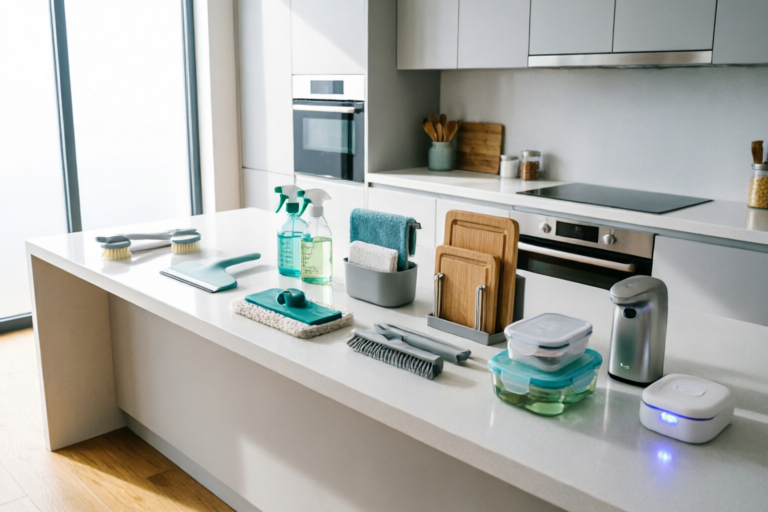
Invest in a sturdy, lightweight tote that fits comfortably in your hand. Inside, place your daily essentials: all-purpose spray, glass cleaner, microfiber cloths, a scrub brush, and disposable wipes. Keep this kit stocked near your staircase or front door so you can grab it and go. When you move from room to room, the tools go with you. This eliminates transition time entirely. Furthermore, having a designated caddy ensures nothing gets left behind or lost under the sink. It turns your cleaning routine into a mobile assembly line where you can tackle the entryway, hallway, and living area without leaving your tools behind. Some enthusiasts even designate different colored caddies for different zones (e.g., one blue for the kitchen, one green for the bathroom) to prevent cross-contamination and maintain organization.
### Hack #2: Declutter Before You Deterge
You cannot clean clutter. There is no product on the market that makes piles of laundry or stacks of paperwork disappear without manual sorting. Attempting to mop around piles of toys or vacuum papers stuck to the carpet is a recipe for frustration and wasted time.
The second hack is non-negotiable: perform a visual sweep and physical declutter before applying any chemicals or tools. Spend five minutes walking through the room and picking up items out of place. Throw trash in the bin, put shoes back in the hall closet, and stack pillows. Once the "noise" is removed, the surfaces are exposed, and your cleaning path becomes clear. This simple act reduces the physical number of obstacles you must navigate. It allows you to focus on actual hygiene and dirt removal rather than moving objects. By clearing the deck first, you ensure that every minute spent spraying and wiping yields a visible return on investment. It prevents the frustrating scenario of accidentally moving a coaster three times during a wipe-down session.
These two pre-cleaning strategies set the stage for everything that follows. They represent the foundation of efficiency—removing physical barriers and logistical distractions—so that when you actually start cleaning, you are in a state of flow rather than interruption.
## High-Speed Tactics for Kitchen and Bathroom
The kitchen and bathroom are the high-traffic zones of any home, and consequently, they accumulate dirt and grime faster than anywhere else. Because these rooms require frequent maintenance, optimizing the workflow here yields the highest reward for time saved. These areas demand speed, precision, and the ability to multitask without risking safety or mess.
### Hack #3: The Instant Soak Method for Cookware
Washing dishes is universally regarded as the most tedious part of meal prep. A common mistake is letting food dry onto pans until the next morning, at which point you face a soaking job that takes forever. Instead, adopt the Instant Soak Method.
As soon as you remove a pot or pan from the heat, fill it with warm water and a drop of dish soap. Place it in the sink immediately. This prevents food particles from adhering to the metal surface. Even if you are tired and just want to sleep, a soaked pan requires minimal effort the next morning. For baked-on cheese or sauces, adding a bit of baking soda helps break down the bond further. By intercepting the drying process, you convert a labor-intensive scrubbing task into a quick rinse-and-wipe. Over the course of a month, this saves dozens of minutes of elbow grease and extends the lifespan of your cookware, which is a secondary benefit worth noting.
### Hack #4: Wiping Counters While Cooking (Passive Maintenance)
Active cleaning means dedicating separate time to scrub. Passive maintenance means integrating cleaning into the active process of cooking. This is Hack #4. While you stir a sauce or wait for water to boil, take thirty seconds to wipe down the area immediately around you.
Use a cloth kept damp near the stove. If you splash oil on the backsplash, wipe it immediately. If you cut vegetables and juice spills on the board, dump it and rinse it instantly. This prevents splatters from hardening. The brain loves completion, and cleaning as you go provides small dopamine hits throughout the cooking process rather than dumping a massive burden at the end. It essentially breaks the large task of "kitchen cleaning" into ten tiny, one-minute tasks spread over the hour of cooking. By the time dinner is served, the kitchen is already largely pristine, requiring only a final polish rather than a deep clean.
### Hack #5: The Shower Squeegee Technique
Bathroom tile and shower doors are notorious for developing water spots and mineral buildup. If you wait for weeks to shower-clean, you will spend hours scrubbing mold lines or etched lime. The high-speed tactic here is preventative consistency using a squeegee.
Keep a wall-mounted squeegee permanently outside your shower door. After every shower, spend forty-five seconds pulling the water off the walls and glass. This removes the minerals that cause staining before they settle. In winter, it keeps the room warmer by removing cold moisture evaporation. It takes less than a minute per session, and you will rarely need to use a chemical cleanser again. A monthly deep clean becomes unnecessary; you are performing maintenance that keeps the bathroom perpetually fresh. This simple mechanical action replaces harsh chemicals and aggressive scrubbing pads.
### Hack #6: Multi-Surface Spray Strategy
Carrying five different bottles from room to room slows you down. Many modern households suffer from product redundancy. Hack #6 involves consolidating your chemical arsenal.
Invest in high-quality, pH-balanced cleaners that can handle multiple tasks effectively. For example, a good citrus-based degreaser can often handle kitchen counters, stove tops, and bathroom sinks equally well. Use a "one-bottle system" for general dusting and polishing. Buy larger refillable containers and label them clearly. This reduces the cognitive load of deciding "which bottle does what?" and speeds up the physical action of grabbing the right tool. It simplifies the restocking process, too. When you buy fewer products, you shop less frequently, and when you store them, you organize them easier.
### Hack #7: Microfiber Magic Layers
Finally, equipment matters as much as method. Old rags hold dirt and smear grease. Modern microfiber cloths capture dust, bacteria, and liquid far better than cotton.
Use color coding for microfiber cloths to maintain order and hygiene. Assign red cloths for toilet bowls and hazardous bacteria-prone areas. Blue cloths for glass and mirrors. Green for kitchen surfaces. This prevents cross-contamination, which is crucial for health, and ensures that if a green cloth gets stained, you don't accidentally transfer grease to a window. The electrostatic properties of microfiber pull dirt into the fibers rather than pushing it around. This means you need fewer passes with a wet cloth, significantly cutting the physical labor required to achieve streak-free results. Buying in bulk is economical and ensures you always have a dry option ready.
By implementing these kitchen and bathroom tactics, you stop fighting a losing battle against inevitable messes and start managing the environment proactively. You are not just cleaning dirt; you are engineering a workflow that resists mess accumulation in the first place.
## Lifestyle Habits to Prevent Future Messes
While tactical hacks address the immediate present, lifestyle habits ensure the future remains manageable. Cleaning is often viewed as fixing problems, but true time savings come from preventing problems. This section shifts focus from reaction to prevention, exploring behavioral changes that reduce the workload indefinitely.
### Hack #8: The Daily Five-Minute Reset
Chaos builds up slowly but manifests quickly. The "Five-Minute Reset" is a daily habit performed before bed. Set a timer for five minutes and walk through the main living areas. Return mugs to the kitchen, fold blankets that are draped over chairs, pick up shoes, and reset cushions.
The goal is not perfection; it is readiness. When you wake up the next morning, the house should look as tidy as the previous evening’s start. This creates a positive feedback loop. Waking up in a clean space boosts your mood and productivity. It eliminates the feeling of drowning in a mess when you first leave the bedroom. This habit relies on discipline, but once established, it becomes automatic. It stops the "domino effect" of mess, where one dirty cup leads to a pile of plates, which leads to a countertop overflow. By resetting daily, you maintain a baseline cleanliness that requires zero extra effort.
### Hack #9: The One-Touch Rule
One of the biggest drains on time is items moving from location A to location B, then C, then finally D (the garbage or storage). Every movement is energy expenditure and potential for forgetting.
The One-Touch Rule dictates that when you touch an item, you must deal with it fully in that moment.
If you bring groceries inside, unpack them immediately. Do not just put the bag on the counter and forget it. If you hang your coat, put it in the closet, not the chair. If you receive mail, sort it immediately—shred junk, pay bills, recycle. By making contact mean completion, you avoid the need to revisit items later. This is particularly powerful for kids’ toys. Teach them that if they take a toy out, it belongs in that zone until they put it back. Enforcing this rule consistently reduces the volume of items that require deep cleaning or organizing later. It minimizes the "search time" for things that are misplaced.
### Hack #10: Reducing Incoming Clutter (Maintenance of Volume)
The hardest cleaning to do is managing physical objects that have no function. This hack is about curating. If you buy less, you clean less. Every object requires maintenance—dusting, washing, putting away, repairing.
Audit your consumption habits. Are you buying clothes you haven’t worn in years? Is that gadget gathering dust? Practice intentional acquisition. When something new comes in, ask yourself where it will live and who will care for it. If the answer is "I don’t know," don’t bring it in. This reduces the total surface area of your home that needs attention. A minimalist approach isn’t just aesthetic; it’s a functional time-saver. Fewer possessions mean faster decluttering sessions, quicker dusting runs, and less decision fatigue regarding storage. Consider donating boxes that are overflowing. If you can’t find a specific box of stuff to discard, but you aren’t touching it, give it to charity. Reducing the inventory of your home lowers the ceiling for mess.
## Conclusion and Implementation Plan
Cleaning a home does not have to be a Herculean task that consumes your evenings and weekends. By shifting your perspective from "fighting the mess" to "designing a workflow that avoids it," you unlock hours of freedom. We have explored ten distinct hacks ranging from the logistical optimization of cleaning caddies to the psychological discipline of the one-touch rule. Each hack serves a dual purpose: reducing the immediate time spent scrubbing and lowering the frequency of necessary deep cleans.
### Recap of Core Principles
To summarize the core principles discussed:
1. **Optimization:** Tools should travel with you (caddy) and stay stocked.
2. **Prevention:** Decluttering first removes physical barriers.
3. **Speed:** Soaking pots and using squeegees leverage physics rather than force.
4. **Integration:** Cleaning while cooking or resetting daily merges tasks efficiently.
5. **Habits:** Limiting incoming clutter and touching items once prevents backlog.
These aren’t magic spells; they are systems. Systems work best when applied consistently. You do not need to implement all ten changes overnight. Resistance to change is natural, and trying to overhaul your entire life in a single weekend often leads to burnout and abandoned plans.
### Your Week Implementation Plan
To ensure these concepts stick, we encourage you to select **two or three hacks** to adopt this week for immediate results. Here is a recommended rollout plan:
* **Day 1-3:** Focus on **Hack #1 and #2**. Build your cleaning caddy and commit to decluttering every room before you clean it. Observe how much smoother the workflow feels when you don’t have to backtrack for tools or move objects aside.
* **Day 4-5:** Add **Hack #3 and #6**. Start soaking pots immediately after cooking and consolidate your sprays into a multi-use cleaner. Notice the reduction in scrubbing time.
* **Day 6-7:** Introduce **Hack #8**. Perform the five-minute reset before bed. Go to sleep in a slightly tidier room than you woke up in.
Track your feelings and the time saved. Did you feel less stressed in the mornings? Did the kitchen stay cleaner longer? Use these metrics to motivate yourself to pick up another hack next week. Over a month, this layering of habits will compound, leading to a dramatically lighter load.
Your time is your most valuable asset. Don’t spend it chasing dirt. By adopting these efficient, intelligent strategies, you reclaim your time to spend on what truly matters—relaxation, family, hobbies, and rest. The home should be a harbor for peace, not a source of endless labor. Start today, choose one hack, and watch your days expand.
Comments

home_renovator
saved! picking the kitchen counter tip for tomorrow morning. fingers crossed it sticks.
👍 27👎 0

minimalist_mike
one touch rule is tough with a spouse who likes piles. but the reset routine helps a lot.
👍 0👎 0

dad_of_two
honestly half these require zero kids around. trying the wipe while cooking one at least!
👍 27👎 0

busy_mom_jen
the caddy hack is definitely going to save me trips. just need to stop buying more cleaning spray lol
👍 23👎 0

cleanfreak99
quick question - does soaking pans overnight mess up nonstick coatings? i have those expensive ones
👍 5👎 0

sarah_homeslice
tried the squeegee thing on the shower today omg huge difference!! why didnt anyone tell me sooner 🙌
👍 7👎 0