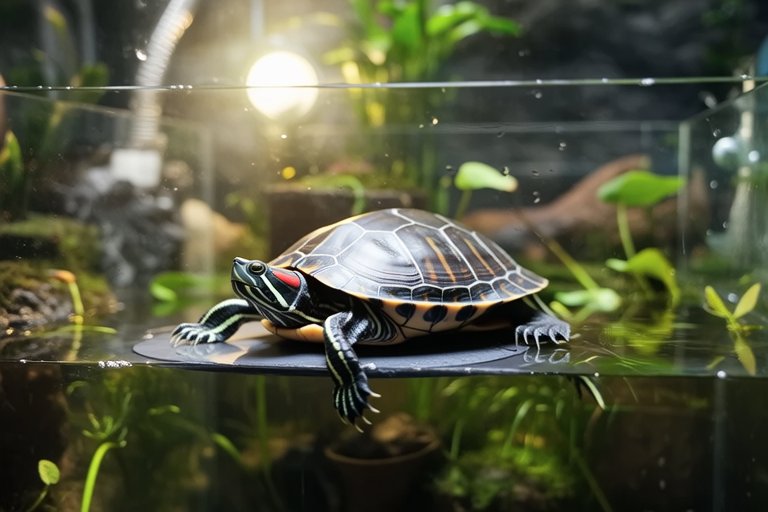
DIY Guide: Creating an Oasis for Your Red-eared Slider at Home
Introduction
Welcome to your comprehensive DIY guide on creating a perfect habitat for your red-eared slider. This turtle species is one of the most popular pets due to their friendly nature and relatively low maintenance. However, to ensure they thrive, it’s crucial to set up a suitable living environment that meets their specific needs.
Setting Up the Habitat
Selecting the Right Tank
The first step in creating an oasis for your red-eared slider is selecting the right tank. These turtles grow quickly, so it’s important to choose a tank that can accommodate their growth. For a hatchling, a 20-gallon tank is sufficient, but as they grow, you’ll need to upgrade to at least a 40-gallon tank or larger.
Substrate and Decorations
Choosing the right substrate and decorations is crucial for your turtle’s comfort and safety. Avoid using gravel or small pebbles, as these can be accidentally ingested and cause health issues. Instead, opt for smooth river rocks or a turtle-safe substrate. Add some plants, caves, and floating platforms to create hiding spots and basking areas.
Necessary Equipment
UVB Lighting
Red-eared sliders require UVB lighting to synthesize vitamin D3, which helps them absorb calcium. Invest in a high-quality UVB lamp designed specifically for reptiles. Place the light above the basking area and ensure it covers at least 75% of the tank. Replace the bulb every six months to maintain its effectiveness.
Heat Lamp
To maintain optimal water temperature, use a submersible heater. For basking, a heat lamp with a ceramic heat emitter or a reptile-specific heat lamp will provide the warmth your turtle needs. Position the heat lamp so that the basking spot reaches around 88-95°F (31-35°C).
Ideal Water and Temperature Conditions
Water Quality
Maintaining clean water is vital for your turtle’s health. Use a filtration system to keep the water free from harmful bacteria and debris. Perform regular water changes, replacing about 25-30% of the water weekly. Test the water regularly for pH levels, ammonia, and nitrite levels.
Temperature Control
Ensure the water temperature stays between 75-80°F (24-27°C). The basking area should reach 88-95°F (31-35°C) during the day, while the cooler side of the tank should be around 75-80°F (24-27°C). At night, the temperature can drop slightly, but avoid drastic fluctuations.
Dietary Requirements
Feeding Schedule
Feed your red-eared slider daily when they are young, then gradually reduce feeding frequency as they mature. A good rule of thumb is to feed juveniles daily and adults every other day. Offer a balanced diet consisting of commercial turtle pellets, fresh vegetables, and occasional live or frozen feeder fish.
Variety of Food
Provide a variety of foods to ensure your turtle gets all the nutrients they need. Commercial turtle pellets should make up the bulk of their diet, supplemented with fresh vegetables like romaine lettuce, kale, and carrots. Occasionally offer live or frozen feeder fish, earthworms, or dubia roaches for protein.
Tips for Maintaining Health
Regular Check-ups
Schedule routine visits to a veterinarian who specializes in reptiles. They can perform health checks, recommend necessary vaccinations, and address any potential health issues before they become serious.
Hygiene Practices
Establish a cleaning routine to prevent the buildup of harmful bacteria and parasites. Clean the tank, filter, and accessories regularly. Disinfect the tank thoroughly once a month using a reptile-safe disinfectant.
Conclusion
By following this DIY guide, you’ll be able to create a safe and comfortable living environment for your red-eared slider. Remember that their well-being depends on proper care and attention. With the right setup and maintenance, your turtle will thrive and bring joy to your home for years to come.
