The Ultimate Guide to Creating a Happy Home for Your Tarantula
Welcome to the world of tarantulas! These fascinating creatures require specific care to thrive in their new home. This comprehensive guide will walk you through every aspect of setting up an optimal habitat for your pet tarantula.
Choosing the Right Enclosure
The first step in creating a happy home for your tarantula is selecting the right enclosure. The size of the enclosure depends on the species of tarantula you have. For most tarantulas, a 10-gallon tank is sufficient, but larger species may require a 20-gallon tank or more. Ensure the enclosure has a secure lid with adequate ventilation to prevent escape. Glass or acrylic tanks are preferred as they maintain heat and humidity well.
Appropriate Substrate
Substrate is crucial for your tarantula’s comfort and well-being. It provides a natural environment and aids in maintaining the correct humidity levels. Common substrates include coconut fiber, peat moss, and reptile bark. A layer of about 3-4 inches deep is ideal. Avoid substrates that can be easily ingested, such as small gravel or sand, which could cause impaction.
Temperature and Humidity Requirements
Most tarantulas prefer temperatures between 75-85°F (24-29°C) during the day, dropping slightly at night. Use a digital thermometer and hygrometer to monitor these conditions. Humidity levels should range from 60-80%, depending on the species. Maintaining the right humidity level helps prevent dehydration and respiratory issues. Use a spray bottle to mist the enclosure as needed to achieve the desired humidity.
Ventilation Needs
Proper ventilation is vital for preventing stagnant air and mold growth within the enclosure. Ensure there are adequate holes in the lid for airflow. However, avoid drafts that could cause temperature fluctuations. Some owners add a mesh screen over part of the lid for better air circulation while still providing security for the tarantula.
Hiding Spots
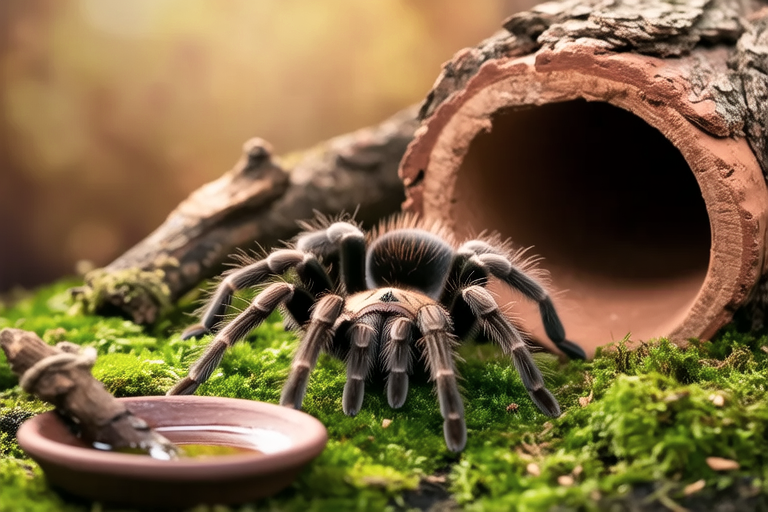
Tarantulas are solitary creatures that appreciate privacy. Providing hiding spots encourages natural behaviors and reduces stress. You can use cork bark, half logs, or plastic plants as hiding spots. Ensure the hiding spots are secure and cannot topple over, potentially injuring the tarantula. Position them near the center of the enclosure to allow the tarantula easy access.
Feeding Arrangements
Feed your tarantula once a week, offering crickets, mealworms, or dubia roaches. Prey items should be no larger than the width of the tarantula’s abdomen. Place the food item in the enclosure and remove any uneaten prey after 24 hours to prevent contamination. Always provide fresh water in a shallow dish. Change the water daily and clean the dish regularly to prevent bacterial growth.
Handling Techniques
While tarantulas make wonderful pets, they are not typically handled like other animals. Handling can stress the tarantula and increase the risk of injury. If you must handle your tarantula, gently scoop it up with a soft brush or a paper towel. Support the tarantula’s entire body and move slowly to minimize stress. Never grab the tarantula by its legs or abdomen.
Maintaining Cleanliness
Regular cleaning is essential to keep your tarantula healthy. Spot-clean the enclosure daily by removing waste and uneaten prey. Replace the substrate every 1-2 months or sooner if it becomes soiled. Clean the enclosure thoroughly with a mild disinfectant solution, rinse well, and dry before adding fresh substrate. Always wash your hands before and after handling the tarantula or its enclosure to prevent the spread of bacteria.
Health Checks
Monitor your tarantula regularly for signs of illness or distress. Look for changes in behavior, appetite, or physical appearance. Healthy tarantulas are active and alert. If you notice any unusual symptoms, consult a veterinarian who specializes in exotic pets. Regular health checks help ensure your tarantula remains in top condition.
Conclusion
Creating a happy home for your tarantula requires attention to detail and commitment to their care. By following the guidelines outlined in this ultimate guide, you’ll provide your tarantula with a comfortable, stimulating environment that promotes health and longevity. Enjoy the rewarding experience of caring for these incredible creatures!
