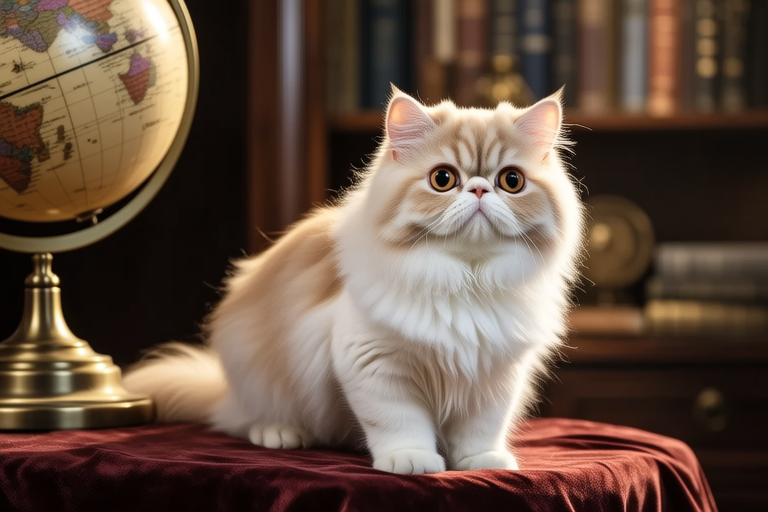
The Origins and Evolution of Persian Cats
Persian cats have been admired for centuries for their striking appearance and gentle demeanor. Their origins can be traced back to ancient Persia, modern-day Iran, where they were highly valued for their beauty and elegance. This article explores the rich history of Persian cats, their transition from symbols of royalty to beloved pets, and their enduring appeal among cat enthusiasts.
Historical References to Persian Cats
The earliest known reference to Persian cats dates back to the first century AD, when they were mentioned in a letter written by the Roman philosopher Pliny the Elder. He described them as having long, luxurious coats and soft, expressive eyes. Persian cats were also depicted in ancient Persian art, including pottery and sculptures, which suggests that they were highly regarded in Persian society. In the 17th century, the Persian cat was introduced to Europe, where it quickly became a favorite among the aristocracy.
Depiction in Art and Literature
Persian cats have been featured in numerous works of art and literature throughout history. They were often portrayed as symbols of luxury and refinement, and their image was used to convey wealth and power. Persian cats were frequently depicted in paintings, sculptures, and tapestries, and they were also mentioned in poetry and literature. One of the most famous depictions of Persian cats is found in the painting “Portrait of a Persian Cat” by Jean-Baptiste Oudry, which was created in the 18th century. The painting portrays a Persian cat with its luxurious coat and gentle expression, and it has become one of the most iconic images of the breed.
Transition from Royalty to Cherished Pets
Persian cats were once considered symbols of royalty and were kept exclusively by the wealthy and powerful. However, over time, they gradually transitioned from being symbols of status to beloved pets. This change began in the 19th century, when Persian cats became more widely available and affordable. As more people had the opportunity to own these beautiful cats, their popularity grew, and they became cherished companions for people from all walks of life. Today, Persian cats are one of the most popular breeds in the world, and they are loved for their gentle nature and affectionate personalities.
Physical Characteristics
Persian cats are known for their long, luxurious coats and round faces. They have large, expressive eyes and small, pointed ears. Their coat is typically thick and fluffy, and it comes in a wide range of colors and patterns. Persian cats are medium-sized cats, weighing between 7 and 12 pounds, and they have a compact, muscular build. Their paws are small and dainty, and their tails are short and fluffy. Persian cats are also known for their calm and gentle demeanor, and they are often described as being very affectionate and loving towards their owners.
Temperament and Care Requirements
Persian cats are known for their calm and gentle demeanor, and they are often described as being very affectionate and loving towards their owners. They are generally quiet and peaceful, and they enjoy spending time lounging around the house. Persian cats are also known for their independent nature, and they tend to be more reserved than other breeds. They are not particularly active, and they prefer to spend their time relaxing and grooming themselves. Persian cats require regular grooming to maintain their long, luxurious coats, and they may need daily brushing to prevent matting and tangling. They also require regular veterinary care, including routine check-ups and vaccinations, to ensure their health and well-being.
Significant Milestones and Figures
The development and popularity of Persian cats can be attributed to several significant milestones and figures. One of the most important figures in the history of Persian cats is William Gordon-Stewart, who played a key role in establishing the breed standard in the early 20th century. Gordon-Stewart was a breeder and exhibitor of Persian cats, and he worked tirelessly to promote the breed and improve its quality. Another important milestone in the history of Persian cats was the establishment of the Persian Cat Club in 1913, which helped to standardize the breed and promote its popularity. The Persian Cat Club played a crucial role in organizing shows and competitions, and it helped to establish Persian cats as one of the most popular breeds in the world.
Why Persian Cats Continue to Captivate Cat Enthusiasts
Persian cats continue to captivate cat enthusiasts today because of their unique combination of beauty and temperament. They are known for their striking appearance, with their long, luxurious coats and expressive eyes, and they are also prized for their gentle and affectionate personalities. Persian cats are also relatively easy to care for, as they are generally calm and peaceful, and they do not require a lot of exercise or stimulation. They are also highly adaptable, and they can thrive in a variety of environments, from busy households to quiet homes. Finally, Persian cats have a rich and fascinating history, and their association with royalty and luxury adds to their allure and mystique.
In conclusion, Persian cats have a long and storied history, dating back to ancient Persia, where they were highly valued for their beauty and elegance. Over time, they have transitioned from being symbols of royalty to beloved pets, and they continue to captivate cat enthusiasts around the world with their striking appearance and gentle demeanor. Whether you are a seasoned cat lover or a newcomer to the world of feline companionship, Persian cats offer a unique and rewarding experience that is sure to delight and inspire.
