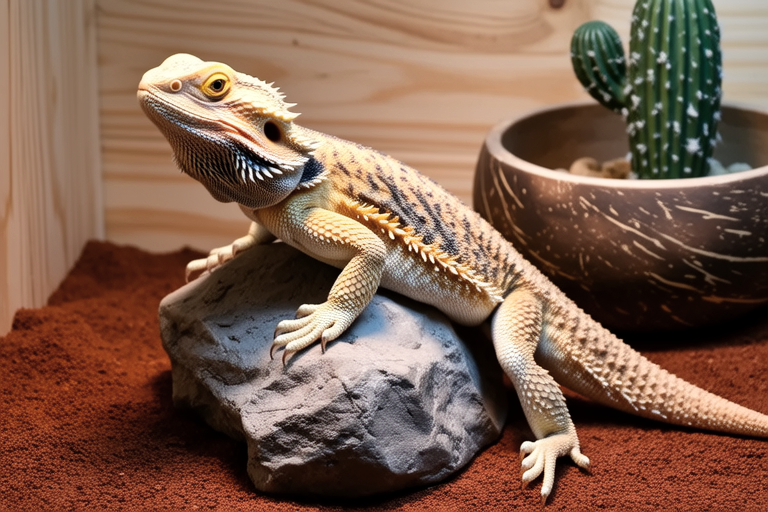
DIY Guide for Designing a Bearded Dragon Habitat
Welcome to your comprehensive guide on creating a budget-friendly, enriching environment for your bearded dragon. This guide will walk you through the process of building a habitat that prioritizes the health and happiness of your scaly friend.
The Importance of Proper Habitat Setup
Creating a suitable habitat is crucial for the well-being of your bearded dragon. It should mimic their natural environment as closely as possible, providing them with the necessary space, temperature gradients, and hiding spots. A well-designed habitat ensures your pet remains healthy and active.
Selecting the Right Enclosure
For a single adult bearded dragon, choose a glass terrarium measuring at least 48 inches long, 24 inches wide, and 24 inches high. This size allows for ample space to move around and explore. Avoid enclosures made of wood or plastic, as they may trap heat and moisture, leading to health issues.
Temperature Gradients
Bearded dragons thrive in environments with a basking spot temperature of 95 to 110 degrees Fahrenheit (35 to 43 degrees Celsius) and a cooler area of 75 to 85 degrees Fahrenheit (24 to 29 degrees Celsius). Achieve this by placing a heat lamp or ceramic heat emitter on one side of the enclosure. Position thermometers at both ends to monitor temperatures accurately.
UV Lighting
Ultraviolet B (UVB) light is essential for calcium absorption and overall health. Use a high-quality UVB bulb specifically designed for reptiles, replacing it every six months. Position the light above the basking area, ensuring your dragon can reach it. Remember, UVB bulbs do not produce heat, so you’ll need separate heat sources.
Substrate and Bedding
Choose a substrate that’s easy to clean and free from dust. Options include reptile carpet, paper towels, or non-clumping, low-dust cat litter. Avoid sand, gravel, and walnut shells, as these can cause impaction if ingested. For a more natural look, consider using large, flat rocks or tiles.
Safe Decorations
Add branches, logs, and artificial plants to create a stimulating environment. These items provide climbing opportunities and hiding spots. Ensure all decorations are securely anchored and free from sharp edges. You can also incorporate cork bark, driftwood, or commercially available reptile-safe vines.
Creating Hiding Spots
Hiding spots offer security and stress relief. Create these areas using half logs, caves, or upturned plant pots. Place one on each end of the enclosure, allowing your dragon to choose between warm and cool spots. Ensure these hiding spots are spacious enough for your dragon to fit comfortably inside.
Feeding and Watering Stations
Place a shallow dish filled with fresh water near the cooler end of the enclosure. Ensure it’s heavy enough to prevent tipping. For feeding, use a shallow dish or hanging feeder to minimize mess. Position food dishes away from the basking area to prevent contamination.
Step-by-Step Habitat Construction
Step 1: Prepare the Enclosure
Begin by thoroughly cleaning the terrarium with mild soap and water. Rinse it well and allow it to dry completely before setting up the habitat. If using a new enclosure, remove any packaging or protective film to ensure air circulation.
Step 2: Install Heat Sources
Mount a heat lamp or ceramic heat emitter on one side of the enclosure using a sturdy clamp. Position it so that it provides a basking spot temperature of 95 to 110 degrees Fahrenheit (35 to 43 degrees Celsius). Place a thermometer on this side to monitor the temperature accurately.
Step 3: Add UVB Lighting
Install a UVB bulb above the basking area, ensuring it covers at least half of the enclosure. Secure it using appropriate fixtures and position it at a safe distance from the substrate. Replace the bulb every six months to maintain its effectiveness.
Step 4: Lay Substrate
Spread a layer of substrate evenly across the bottom of the enclosure. Ensure it’s deep enough to allow for digging but shallow enough to prevent ingestion. Smooth out the surface and check for any loose pieces that could pose a choking hazard.
Step 5: Arrange Decorations
Start by placing larger items like branches and logs. Arrange them to create climbing opportunities and shade. Next, add smaller decorations such as caves and artificial plants. Ensure everything is securely positioned and free from sharp edges.
Step 6: Set Up Feeding and Watering Stations
Position the water dish near the cooler end of the enclosure. Place it on a stable surface and ensure it won’t tip over. For feeding, use a shallow dish or hanging feeder. Place it away from the basking area to prevent contamination.
Step 7: Final Checks
Before introducing your bearded dragon to the new habitat, perform a final inspection. Ensure all heat sources are functioning correctly and the temperature gradients are accurate. Check that all decorations are secure and there are no potential hazards. Clean the enclosure one last time and introduce your pet gradually.
Maintaining the Habitat
Regular maintenance is key to keeping your bearded dragon’s habitat clean and safe. Spot clean daily by removing any uneaten food or waste. Deep clean the enclosure every two weeks, replacing the substrate and thoroughly cleaning all surfaces. Monitor the temperature and humidity levels regularly, making adjustments as needed.
Conclusion
By following this guide, you’ve created a healthy, enriching environment for your bearded dragon. Remember, a well-maintained habitat promotes their physical and mental well-being. Regularly observe your pet’s behavior and adjust the habitat as necessary to ensure they remain happy and healthy. With proper care and attention, your bearded dragon will thrive in their new home.
