Growth Stages of Red-Eared Sliders: From Hatchlings to Full-Grown Turtles
Red-eared sliders (Trachemys scripta elegans) are one of the most popular pet turtles worldwide. Their lifespan can range from 20 to 40 years, depending on care and environmental conditions. Understanding the growth stages of these turtles is crucial for providing them with the best possible care. This comprehensive guide will take you through the journey of a red-eared slider, from its birth to adulthood.
Birth and Early Life: The First Few Months
Newborn red-eared sliders, or hatchlings, are tiny creatures measuring about 1 to 1.5 inches (2.5 to 3.8 cm) in carapace length. They weigh approximately 0.5 ounces (14 grams). Despite their small size, these babies are fully developed and independent, capable of swimming and hunting for food right after hatching.
The growth rate during this stage is rapid. Within the first year, hatchlings can double in size. By six months, they may reach a carapace length of around 2 to 3 inches (5 to 7.6 cm). Proper nutrition and a clean environment are essential for healthy growth. A diet rich in protein, such as insects and small fish, supports their rapid development. Owners should also provide a basking area with UVB lighting to help them synthesize vitamin D3, which is crucial for calcium absorption.
Growth Rate and Environmental Factors
Environmental factors play a significant role in determining the growth rate of red-eared sliders. Temperature, humidity, and water quality all impact their metabolism and overall health. Maintaining an optimal temperature of 75 to 85°F (24 to 29°C) in the water and a basking spot of 85 to 95°F (29 to 35°C) is essential for their growth. Water that is too cold can slow down their metabolism, while water that is too warm can lead to stress and disease.
Water quality is equally important. Regularly changing the water and maintaining appropriate filtration helps prevent bacterial and fungal infections. These infections can hinder growth and cause serious health problems if left untreated. Additionally, providing adequate space for swimming and basking ensures that the turtle has room to exercise, which contributes to healthy muscle and bone development.
Dietary Needs Through Different Life Stages
During the early stages of life, red-eared sliders are primarily carnivorous, feeding on insects, worms, and small fish. As they grow, their diet gradually shifts towards a more omnivorous pattern, incorporating plant matter such as leafy greens, fruits, and vegetables. This change in diet reflects the natural progression of their nutritional needs as they transition from a fast-growing juvenile to a slower-growing adult.
For hatchlings and juveniles, high-protein foods like commercial turtle pellets, earthworms, and minnows are recommended. These foods provide the necessary nutrients for rapid growth. As the turtle matures, owners should introduce a variety of vegetables, including collard greens, romaine lettuce, and carrots, to their diet. Fruits like berries and melons can be offered occasionally but should not constitute a large part of their diet due to their high sugar content.
Common Health Issues and Prevention
Red-eared sliders are generally hardy animals, but they are susceptible to certain health issues, particularly if their living conditions are not ideal. Metabolic bone disease (MBD), caused by a lack of calcium and vitamin D3, is one of the most common problems. Signs of MBD include soft shells, swollen limbs, and lethargy. To prevent MBD, ensure your turtle has access to UVB lighting and a balanced diet.
Shell rot, another prevalent issue, occurs when bacteria or fungi infect the shell. Poor water quality and rough handling can contribute to shell rot. Regular cleaning of the tank and gentle handling of the turtle can help prevent this condition. Respiratory infections, characterized by wheezing, nasal discharge, and lethargy, can result from cold temperatures or poor air circulation. Maintaining the correct temperature gradient and ensuring good ventilation in the enclosure can reduce the risk of respiratory infections.
Comparisons Between Hatchlings and Adults
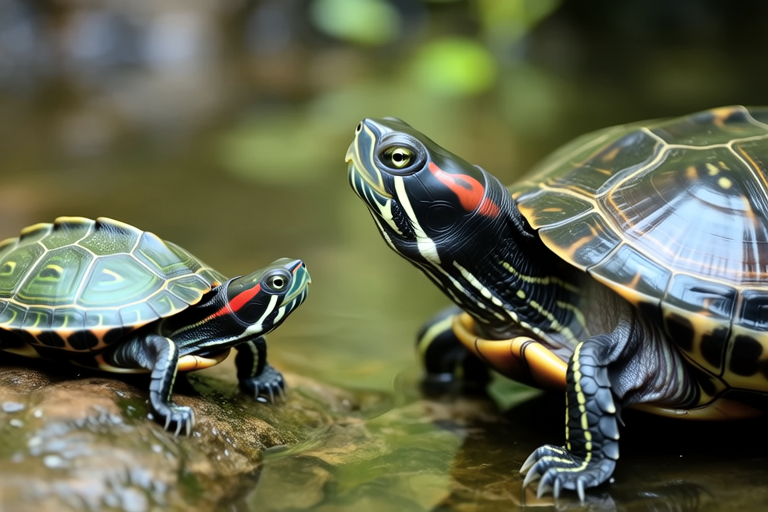
The difference in size between hatchlings and adults is striking. While hatchlings are just a few inches long, adults can reach lengths of 8 to 13 inches (20 to 33 cm) for females and 5 to 9 inches (13 to 23 cm) for males. The carapace of an adult turtle is domed and smooth, whereas a hatchling’s carapace is flatter and more flexible. Adult red-eared sliders also develop distinct red patches behind their eyes, giving them their name.
Behaviorally, young turtles tend to be more active and curious than adults. They are constantly exploring their environment, searching for food, and interacting with their surroundings. As they mature, they become less active and more sedentary, spending more time basking and resting. This behavioral change is a natural part of their development and does not necessarily indicate a health problem.
Tips for Owners to Ensure Healthy Development
Providing a suitable habitat is critical for the healthy development of red-eared sliders. A well-maintained tank with appropriate water temperature, filtration, and UVB lighting is essential. Owners should also ensure that the tank is spacious enough for the turtle to swim freely and bask comfortably. As the turtle grows, the tank size should be adjusted accordingly to accommodate its increasing size.
Regular health checks are also important. Owners should monitor their turtle’s appetite, activity level, and overall appearance. Any sudden changes in behavior or physical condition should prompt a visit to a veterinarian specializing in reptiles. Additionally, owners should familiarize themselves with common health issues and preventive measures to ensure their turtle remains healthy and happy.
Conclusion
Raising red-eared sliders from hatchlings to adults is a rewarding experience that requires commitment and attention to detail. By understanding the growth stages of these turtles and providing them with the proper care and environment, owners can ensure that their pets thrive and live long, healthy lives. Remember, the key to successful turtle ownership lies in creating a stimulating and supportive habitat that meets the specific needs of each life stage.
