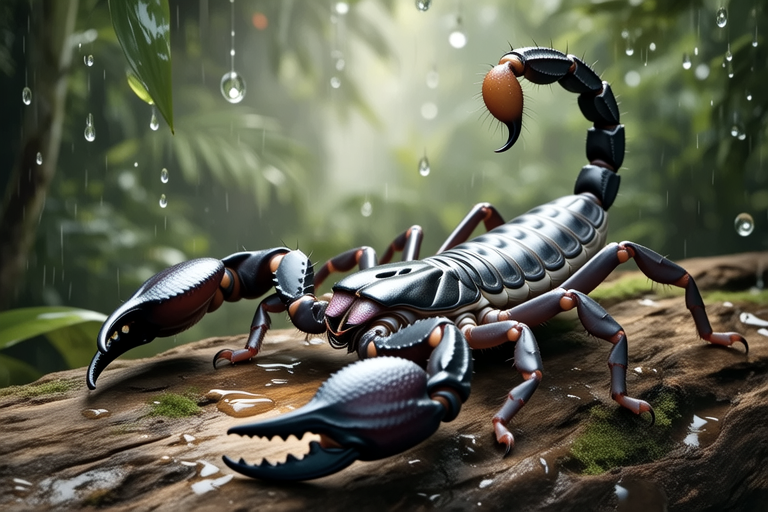
From Rainforest to Living Room: How Heterometrus spinifer Is Taking the Pet World by Storm
In recent years, the world of exotic pet ownership has undergone a quiet revolution—one driven not by flashy reptiles or colorful birds, but by an unassuming arachnid with a striking blue hue and a reputation for calm demeanor. Enter Heterometrus spinifer, the Indian Blue Scorpion. Once confined to the humid canopies of Southeast Asian rainforests, this species is now finding its way into living rooms across Europe, North America, and beyond. With its mesmerizing coloration, low-maintenance care, and surprisingly docile nature, H. spinifer is capturing the hearts—and curiosity—of a new generation of animal enthusiasts.
A Glimpse into the Wild: The Natural Habitat of Heterometrus spinifer
Native to the dense tropical rainforests of India, Sri Lanka, Myanmar, Thailand, and parts of Indonesia, Heterometrus spinifer thrives in environments where humidity soars above 80% and temperatures hover between 24°C and 30°C (75°F–86°F). These scorpions are typically found beneath fallen logs, leaf litter, or in the crevices of tree bark, where they remain hidden during the day and emerge at night to hunt.
As a key component of forest ecosystems, H. spinifer plays a vital role in controlling insect populations. Its nocturnal hunting habits help maintain ecological balance, and its presence often signals a healthy, undisturbed habitat. Unlike many other scorpion species that prefer drier, desert-like conditions, H. spinifer is uniquely adapted to high moisture levels—a trait that makes it both fascinating and challenging to replicate in captivity.
Striking Appearance: What Makes It Stand Out?
One glance at Heterometrus spinifer reveals why it’s considered one of the most visually captivating scorpion species. Adults typically range from 9 to 12 centimeters (about 3.5 to 4.7 inches) in length, making them among the larger scorpions commonly kept as pets. Their bodies display a stunning iridescent blue-gray sheen, especially prominent under natural light or UV illumination—giving them a near-futuristic appearance.
The scorpion’s pedipalps (claws) are robust and slightly curved, ideal for grasping prey, while its tail—though capable of delivering a sting—is relatively short compared to more aggressive species. The most distinctive feature, however, is its broad, flattened cephalothorax and the pronounced spines along its back and legs, which give it a rugged, armored look. This combination of size, color, and structure sets H. spinifer apart from its more common, drab-colored relatives.
Behavior and Temperament: Calm, Curious, and Surprisingly Affectionate
Contrary to popular belief, Heterometrus spinifer is far from aggressive. In fact, many experienced keepers describe them as “inquisitive” rather than defensive. While all scorpions possess stingers and should be treated with respect, H. spinifer rarely uses its venom unless provoked or threatened.
These scorpions are primarily nocturnal, spending daylight hours tucked away in their hiding spots. At night, they become active explorers, often venturing out to patrol their enclosure or investigate new objects. Some owners report that their scorpions will approach hands slowly when fed, showing a level of familiarity and trust rarely seen in other arachnids.
They are also known for their longevity—captively maintained individuals can live up to 10 to 12 years, with some reports of specimens exceeding 15 years with proper care. This long lifespan fosters deeper bonds between keeper and pet, turning what might seem like a mere curiosity into a cherished companion.
Care Requirements: Creating a Safe and Stimulating Environment
While Heterometrus spinifer is considered beginner-friendly among exotic arachnids, it still requires specific environmental conditions to thrive. A well-designed enclosure is essential.
Enclosure Setup
A 10-gallon terrarium or larger is recommended for a single adult. The enclosure should be vertically oriented to accommodate the scorpion’s need for climbing surfaces. Substrate options include coconut fiber, peat moss, or a mix of soil and sphagnum moss—materials that retain moisture without becoming soggy. A layer of 2–3 inches is ideal.
Provide ample hiding places such as cork bark, driftwood, or artificial caves. Multiple hiding spots allow the scorpion to choose its preferred retreat, reducing stress. Live plants like pothos or ferns can enhance humidity and add aesthetic value, though they must be non-toxic and pesticide-free.
Humidity and Temperature
Maintain humidity levels between 75% and 85%. Use a hygrometer to monitor levels accurately. Mist the enclosure lightly once or twice daily using dechlorinated water. Avoid over-misting, which can lead to mold or bacterial growth.
Temperature should be kept steady between 26°C and 28°C (79°F–82°F) during the day. A heat mat placed on one side of the enclosure allows for a thermal gradient, enabling the scorpion to regulate its body temperature. Never place heating elements directly inside the substrate; use a thermostat to prevent overheating.
Diet and Feeding
Heterometrus spinifer is a carnivore with a preference for crickets, roaches, and mealworms. Offer prey items no larger than the width of the scorpion’s body. Feed every 5–7 days, adjusting frequency based on age and activity level. Overfeeding can lead to obesity and health issues.
Always provide fresh water in a shallow dish or sponge. Some keepers opt for a damp sponge soaked in water, which serves both as hydration and a humidity source.
Handling Guidelines
Though H. spinifer is generally calm, handling is discouraged. Scorpions are sensitive to stress, and even brief interactions can disrupt their routine. If necessary, use a soft brush or tongs to gently guide them—never pick them up directly with bare hands.
When observing your scorpion, do so quietly and from a distance. Sudden movements or loud noises can trigger defensive behavior. Respect their space, and you’ll be rewarded with peaceful coexistence.
Dispelling Myths: Venom and Safety for Beginners
Perhaps the biggest misconception surrounding Heterometrus spinifer is the fear of its venom. While all scorpions possess venom, H. spinifer’s is considered mild and medically insignificant to humans. Most people experience only a brief, localized pain akin to a bee sting—swelling may occur briefly, but serious reactions are extremely rare.
According to Dr. Anjali Mehta, a herpetologist specializing in arachnids at the National Zoological Research Institute in New Delhi, “Heterometrus spinifer is actually one of the safest scorpion species for novice keepers. Its venom is primarily used to subdue small insects, not deter predators. For a human, the sting is unpleasant but not dangerous.”
Moreover, this species rarely stings unless cornered or mishandled. With proper enclosure design and respectful interaction, the risk of being stung is minimal—far less than with many other commonly kept pets.
Ethical Considerations: Wild-Caught vs. Captive-Bred Specimens
The growing popularity of Heterometrus spinifer raises important ethical questions. While wild-caught specimens were once common, the demand for captive-bred animals is rising due to conservation concerns and improved breeding techniques.
Wild collection can disrupt local ecosystems and contribute to population declines, particularly if done unsustainably. Captive-bred individuals, on the other hand, are bred in controlled environments with consistent health records and reduced environmental impact.
Reputable breeders prioritize responsible practices: they avoid overharvesting, maintain genetic diversity, and ensure humane treatment. As a rule of thumb, always ask for documentation proving the animal’s origin. If a seller cannot provide proof of captive breeding, consider it a red flag.
“Choosing a captive-bred H. spinifer isn’t just about ethics—it’s about responsibility,” says Marcus Lin, a veteran scorpion keeper and founder of the International Arachnid Society. “It ensures better health outcomes, reduces pressure on wild populations, and supports sustainable hobby practices.”
Responsible Ownership: More Than Just a Pet
Keeping Heterometrus spinifer goes beyond aesthetics. It’s an opportunity to learn about biodiversity, ecology, and the delicate balance of life in tropical forests. Many owners find themselves researching the species’ biology, evolution, and conservation status—turning a simple pet into a gateway to deeper scientific understanding.
Responsible ownership also includes educating others. Misinformation about scorpions abounds—many people view them as pests or danger symbols. By sharing accurate information and showcasing the gentle nature of H. spinifer, keepers help shift public perception and foster appreciation for lesser-known species.
The Future of Exotic Pets: A Cultural Shift Toward Appreciation
The rise of Heterometrus spinifer as a household pet reflects a broader cultural shift in how we relate to wildlife. Instead of focusing solely on flashy or traditional pets, more people are embracing unique, ecologically significant species that challenge preconceptions and inspire learning.
This movement is supported by advancements in husbandry knowledge, online communities, and accessible educational resources. Platforms dedicated to exotic pet care now offer detailed guides, video tutorials, and forums where beginners can seek advice from seasoned keepers.
Looking ahead, experts predict a continued increase in interest in “under-the-radar” species—animals that are beautiful, intelligent, and resilient, yet often overlooked. From tarantulas to harvestmen and even certain frogs, the future of exotic pet ownership lies in discovery, education, and sustainability.
As Heterometrus spinifer continues to captivate audiences worldwide, it stands not just as a pet, but as a symbol of our evolving relationship with nature. It reminds us that beauty and wonder aren’t reserved for lions or parrots—they can also be found in a tiny, blue-hued scorpion quietly navigating its world in a glass tank.
Final Thoughts: A Quiet Revolution in the Pet World
The journey of Heterometrus spinifer from the rainforest floor to the modern living room is more than a trend—it’s a testament to changing values in pet ownership. It speaks to a desire for connection with nature, a hunger for knowledge, and a growing awareness of ethical responsibility.
For those considering a new pet, Heterometrus spinifer offers something rare: a creature that is both visually stunning and temperamentally serene, demanding respect without requiring constant attention. It teaches patience, observation, and humility in the face of another life form.
So next time you see a photo of a blue scorpion in a terrarium, don’t flinch. Look closer. You’re not just seeing a curious critter—you’re witnessing a quiet revolution. One where science, compassion, and wonder come together in a small, silent creature that’s redefining what it means to share your home with another species.
