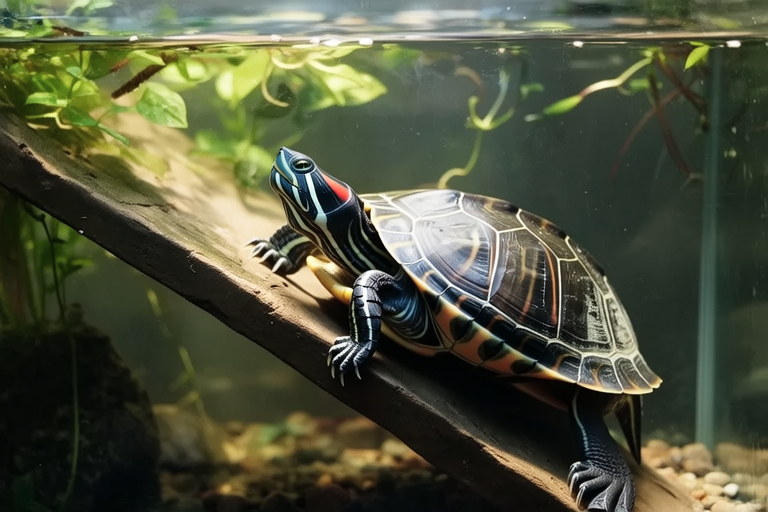
How to Create the Ultimate Habitat for Your Red-Eared Slider Turtle
Red-eared slider turtles (Trachemys scripta elegans) are popular pets known for their vibrant colors and relatively low-maintenance care. However, providing them with an optimal habitat is crucial for their health and longevity. This comprehensive guide will walk you through setting up the perfect environment for your red-eared slider turtle, covering essential aspects such as tank size, water quality, filtration, temperature, lighting, basking areas, substrate, and diet.
Necessary Tank Size
The first step in creating a suitable habitat for your red-eared slider turtle is ensuring that it has enough space to thrive. A common mistake among new owners is underestimating the space needed as the turtle grows. A juvenile red-eared slider can comfortably live in a 20-gallon tank, but this size is only appropriate for its early stages of life. As the turtle matures, it will require significantly more space.
For adult red-eared sliders, a minimum tank size of 40 gallons per turtle is recommended. If you plan to keep multiple turtles, add 10 gallons for each additional turtle. For instance, two adult red-eared sliders would need at least a 60-gallon tank. The rule of thumb is that the length of the tank should be at least twice the length of the turtle.
Water Quality Maintenance
Water quality is critical for the health of your red-eared slider turtle. Poor water conditions can lead to infections, shell rot, and respiratory issues. Regular water changes and proper filtration are key to maintaining clean and healthy water.
Change 25% of the water weekly, or more frequently if the tank is heavily stocked or if there are signs of poor water quality. Use a dechlorinator to remove harmful chlorine and chloramines from tap water before adding it to the tank. Additionally, consider using a water conditioner that contains beneficial bacteria to promote a healthy aquatic environment.
Filtration Systems
A high-quality filtration system is essential for maintaining water cleanliness and reducing the frequency of water changes. There are several types of filters available, including canister filters, sponge filters, and power filters. Canister filters are highly effective and suitable for larger tanks, while sponge filters are ideal for smaller setups due to their gentle flow.
Select a filter that can handle at least four times the volume of the tank per hour. For example, a 40-gallon tank requires a filter capable of processing 160 gallons per hour. Regular maintenance of the filter is necessary; clean the filter media every two weeks to prevent clogging and ensure efficient operation.
Temperature and Lighting Requirements
Maintaining the correct temperature and lighting is vital for the overall health and well-being of your red-eared slider turtle. These reptiles are ectothermic, meaning they rely on external heat sources to regulate their body temperature.
The water temperature should range between 75°F and 80°F (24°C to 27°C). Use a submersible heater to maintain consistent water temperatures. Place the heater near one end of the tank to create a temperature gradient, allowing the turtle to move between warmer and cooler areas.
Additionally, red-eared slider turtles require UVB light for vitamin D3 synthesis, which aids calcium absorption. Provide a UVB lamp that covers at least 50% of the basking area. Position the lamp about 12 inches above the basking spot and replace the bulb every six months to ensure it remains effective. The ambient air temperature in the tank should be between 80°F and 85°F (27°C to 29°C).
Basking Areas
A basking area is an essential component of a red-eared slider’s habitat. Turtles spend significant time out of the water to dry off and thermoregulate. The basking area should be large enough for the turtle to fully extend its limbs and stretch out comfortably.
Use a sturdy platform, such as a floating turtle dock or a partially submerged rock, as the basking site. Ensure the surface is stable and provides a gradual slope for easy access. Place the basking area on the opposite side of the tank from the water heater to prevent overheating. The basking area should be dry and free of debris.
Substrate Options
The choice of substrate can influence water quality and the turtle’s health. While some turtle owners opt for sand or gravel, these substrates can pose risks, especially for young turtles, as they may accidentally ingest small particles. Instead, consider using smooth river rocks or no substrate at all.
If you choose to use a substrate, select one that is large enough to avoid ingestion and easily cleaned. Avoid substrates like aquarium gravel, which can trap waste and contribute to poor water quality. Regularly check and clean the substrate to prevent the buildup of harmful substances.
Dietary Considerations for Optimal Health
Proper nutrition is essential for the growth and development of your red-eared slider turtle. A balanced diet should consist of a variety of foods, including commercial turtle pellets, fresh vegetables, and occasional protein sources.
Commercial turtle pellets provide essential nutrients and vitamins. Feed your turtle a high-quality pellet formulated for aquatic turtles. Offer vegetables such as leafy greens (kale, collard greens), squash, and bell peppers. Protein sources like earthworms, crickets, and occasional feeder fish can be offered sparingly. Ensure that the diet includes a calcium supplement to support strong shell and bone development.
Feed your turtle daily, offering as much food as it can consume in 10 to 15 minutes. Remove any uneaten food promptly to maintain water quality. Overfeeding can lead to obesity and other health issues.
Expert Advice and Tips
Creating the ultimate habitat for your red-eared slider turtle involves attention to detail and ongoing maintenance. Here are some additional tips from experts:
- Monitor water parameters regularly, including pH, ammonia, nitrite, and nitrate levels, to ensure optimal water quality.
- Provide hiding spots within the tank to reduce stress and promote natural behaviors.
- Consider using a water testing kit to monitor water quality and adjust as needed.
- Keep a close eye on your turtle’s behavior and appearance for any signs of illness or distress.
- Regularly inspect the tank and equipment for wear and tear, replacing parts as necessary.
By following these guidelines and tips, you can create a safe, enriching environment that supports the health and happiness of your red-eared slider turtle. Remember that the needs of your turtle may evolve over time, so be prepared to make adjustments as your pet grows and ages.
